Last Updated: October 26, 2026
Quick Summary
Ask a mobile truck mechanic about ASE certification and diesel experience, written itemized estimates, full rate structures, realistic response times, DOT and heavy diesel capability, warranty terms, and what they need from you when you call. Get estimates and warranty details in writing before any work begins. Most fleets skip at least three of these seven questions.
- Ask whether technicians hold current ASE certification and which certifications apply to your equipment.
- A truck repair estimate should be written, itemized, and given before work starts.
- Request the full rate structure: hourly, after-hours, call-out, diagnostic, and flat versus hourly.
- Ask for a realistic response window and whether 24/7 coverage is real or routed to voicemail.
- Have truck make, model, year, VIN, location, and symptom description ready when you call.
Table of Contents
- What to Ask Before You Hand Over the Keys
- Question 1: What Are Your Mobile Truck Mechanic Qualifications?
- Question 2: How Do You Handle a Truck Repair Estimate?
- Question 3: What Are Your Mobile Mechanic Labor Rates?
- Question 4: How Fast Can You Reach Us for Roadside Truck Repair?
- Question 5: Can You Handle DOT Compliance and Heavy Diesel Work?
- Question 6: What Warranty Covers the Work?
- Question 7: What Do You Need From Us When We Call?
- Frequently Asked Questions
What to Ask Before You Hand Over the Keys
Booking a mobile truck mechanic without asking the right questions is how fleets end up paying twice for the same repair. This guide covers the seven questions that separate a reliable mobile truck mechanic from an expensive gamble.
Here’s the short version: qualifications, estimates, rates, response time, DOT and diesel capability, warranty, and what the tech needs from you. Ask all seven before you book. Most fleets skip at least three of them.
A mobile truck mechanic is a technician who travels to your truck with tools and equipment to diagnose and repair it on site, rather than requiring you to tow the vehicle to a shop. That matters when a box truck is blocking a delivery route at 6 AM.
Below, we break down each question, what a good answer sounds like, and the red flags to watch for.
Question 1: What Are Your Mobile Truck Mechanic Qualifications?
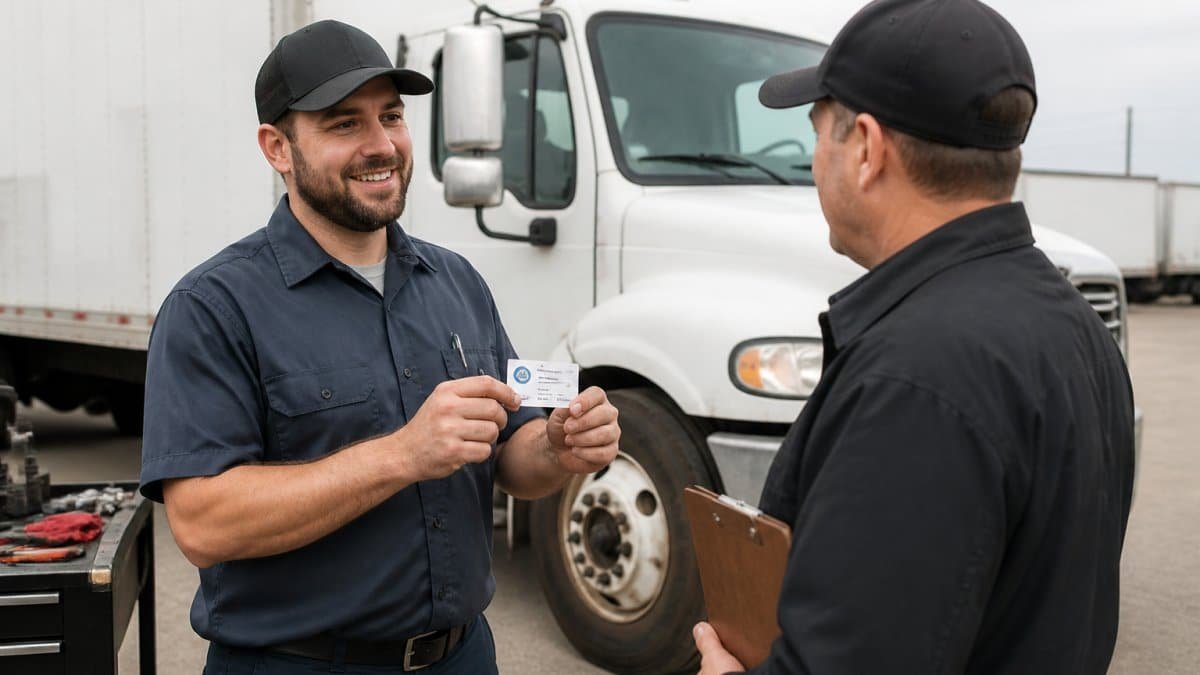
Start with credentials. Ask whether the technicians hold current ASE certification and which specific certifications apply to your equipment.
ASE certification means a technician has passed standardized testing from the National Institute for Automotive Service Excellence. It is voluntary, which is exactly why you should ask. Anyone can call themselves a diesel tech.
Follow up with two more questions:
- How many years has the tech worked on diesel engines?
- Do they carry their own diagnostic scan tools, or do they borrow yours?
A common mistake is accepting “we’re experienced” as an answer. Push for specifics. A shop that invests in certification and diagnostic equipment tends to do the job right the first time.
Question 2: How Do You Handle a Truck Repair Estimate?
A truck repair estimate should be written, itemized, and given to you before work starts. Verbal estimates are where surprise bills come from.
Ask these three things directly:
- Will I get the estimate in writing before any work begins?
- Does the estimate include parts, labor, and any diagnostic fee?
- Who do I call if the final bill comes in higher than quoted?
The best providers call you the moment they find something the original estimate missed. Get the approval process in writing.
Watch out: some providers quote a low diagnostic fee to win the booking, then apply pressure to approve repairs on the spot. Ask upfront whether the diagnostic fee is credited toward the repair if you approve the work.
Question 3: What Are Your Mobile Mechanic Labor Rates?
Mobile mechanic labor rates vary by market, by job type, and by whether the work happens after hours. Ask for the rate structure, not just a single number.
Request a breakdown covering:
- Standard hourly rate
- After-hours or weekend rate
- Mobile call-out or trip fee
- Diagnostic fee, if separate
Then ask whether rates are flat or hourly. Flat-rate pricing gives you a fixed number before the tech arrives. Hourly pricing can swing with the difficulty of the job.
Our advice: ask for the all-in number for your specific repair. If a provider can’t give you a range before showing up, that’s a signal about how their billing works.
Ask for the full rate structure, not just a single hourly number.
| Rate item | What to ask |
|---|---|
| Standard hourly rate | The base rate for normal hours |
| After-hours or weekend rate | Rate for nights and weekends |
| Mobile call-out or trip fee | Whether a trip fee applies |
| Diagnostic fee | Whether it is separate |
| Flat vs hourly | Flat gives a fixed number before arrival |
Question 4: How Fast Can You Reach Us for Roadside Truck Repair?
Response time is the question that decides whether a breakdown costs you an hour or a full day of lost revenue. Ask for a realistic window, not a best-case promise.
Get specifics on:
- Average response time for your area
- Whether 24/7 coverage is real or routed to voicemail
- Whether the tech arrives with parts or needs a second trip
A provider that answers the phone at 2 AM on a Saturday and gives you a real ETA is worth keeping.
If you need emergency roadside assistance, that’s the service to look at before the breakdown happens. For a deeper look at timelines, read how long emergency semi truck repairs take.
Question 5: Can You Handle DOT Compliance and Heavy Diesel Work?
Ask this plainly: can you handle DOT compliance work and heavy diesel repairs, or will you send it elsewhere?
DOT compliance covers the inspections and records that keep your trucks legal on the road. The Federal Motor Carrier Safety Administration sets the rules, and a provider who understands them helps you avoid failed inspections and out-of-service orders.
FMCSA inspection and maintenance requirements outlines what inspectors look for. A good mobile mechanic should speak that language.
Ask whether they perform DOT inspections and whether they document findings in a format you can file. If compliance is a recurring headache, read why regular DOT inspections matter before your next cycle.
Question 6: What Warranty Covers the Work?
Ask what happens if the repair fails. A warranty on parts and labor is the difference between a fixed truck and a repeat bill.
Get it in writing:
- How long the warranty runs
- Whether it covers parts, labor, or both
- What voids it
The thing nobody tells you about mobile repairs is that warranty terms vary. Some providers warrant parts only, leaving you to pay labor a second time. Others stand behind the whole job.
If a provider can’t explain their warranty in one sentence, assume there isn’t one.
Question 7: What Do You Need From Us When We Call?
The best answer here is a short list. A prepared provider tells you exactly what to have ready so the tech arrives once and fixes it.
Have these ready when you call:
- Truck make, model, year, and VIN
- Current location with cross streets
- A description of the symptom, not your diagnosis
- Whether the truck is loaded and what it’s carrying
- A contact name and number on site
Fleets that prepare this list cut their diagnostic time and avoid return trips. Once you’ve got your answers, book an appointment and keep the same list on file for the next call.
Frequently Asked Questions
How do I know if a mobile truck mechanic is qualified?
Ask directly whether the technician holds ASE certification and which specific certifications apply to your vehicle type, such as medium-heavy truck or diesel engines. A qualified mobile truck mechanic should also carry insurance and be able to explain their diagnostic process. Request the name of the technician assigned to your job, not just the company, and confirm they have experience with your truck’s make and model. Clear, specific answers are a good sign; vague ones are a reason to keep looking.
Does mobile truck repair cost more than shop repair?
It can, because the technician brings the shop to you and that convenience is built into mobile mechanic labor rates. You avoid a tow bill, which often runs several hundred dollars, and you cut downtime because the truck is fixed on site. Ask for a written truck repair estimate before work starts so you can compare the total against a shop quote plus towing. Transparent providers itemize parts, labor, and any call-out fee.
Can a mobile mechanic diagnose a diesel truck without towing it?
In most cases, yes. Modern mobile units carry diagnostic scan tools that read fault codes from the engine, transmission, and aftertreatment systems, so a skilled technician can pinpoint many diesel problems on site. Some repairs still require a shop with a lift or specialized equipment, and a good mechanic will tell you upfront when that applies. Ask during booking whether they can diagnose your specific issue roadside or if a tow is likely.
What warranty should a mobile truck repair service provide?
Ask for the warranty in writing before you book, and check two things: how long it lasts and what it covers. A fair policy covers both the parts and the labor on the repair, and spells out what happens if the same problem returns. Get the answer in the estimate or a service agreement rather than a verbal promise. If a provider cannot state a clear warranty, treat that as a warning sign.
Breakdowns don’t schedule themselves around your delivery windows. True Care Truck Services runs 24/7 mobile and shop repair for diesel, box, and semi-truck fleets, staffed by ASE-certified technicians. Transparent pricing and 6-12 month interest-free financing keep the repair bill predictable. Get started with True Care Truck Services and keep your trucks road-ready.